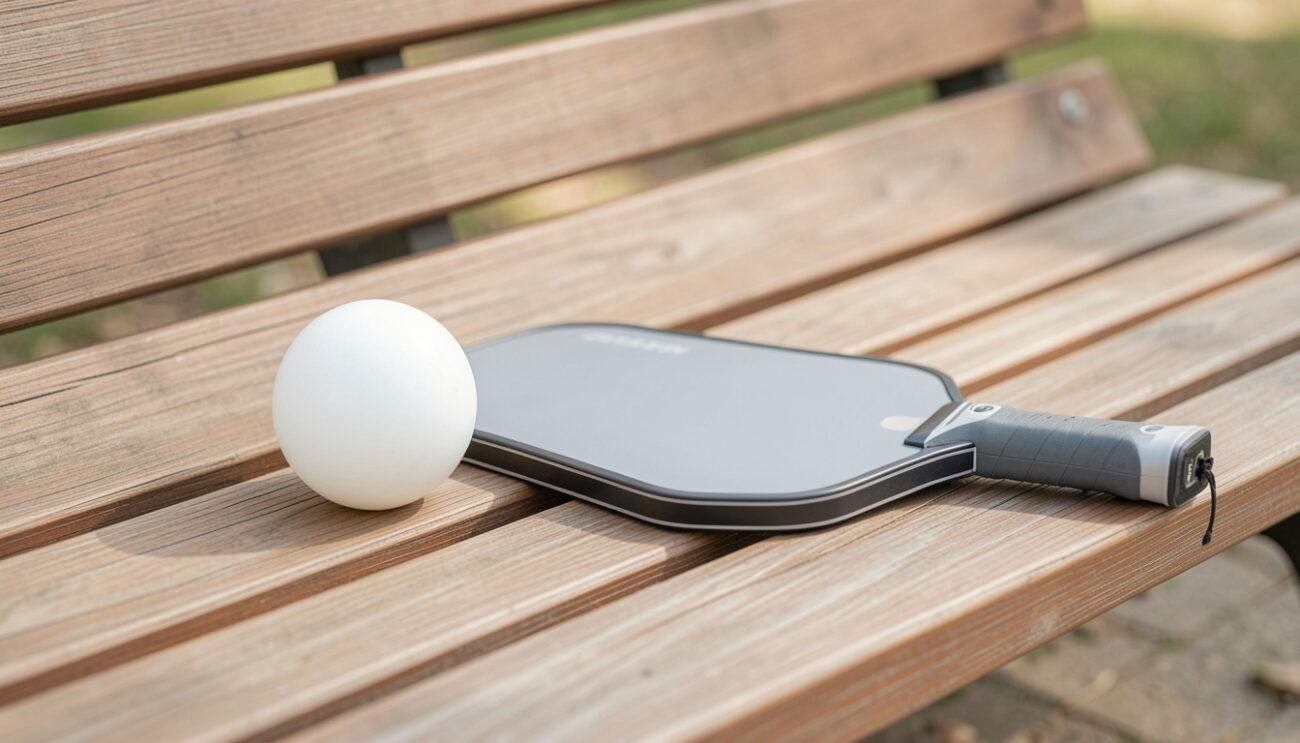
If you are new to the fastest-growing sport in the world, you might wonder why the ball looks like a plastic toy. A ball pickleball is a hollow, perforated plastic sphere specifically engineered to deliver a balanced bounce, smooth flight, and predictable speed on the court. Unlike tennis or racquetballs, a pickleball is light, rigid, and relies on uniform holes to slice through the air smoothly.
The right ball transforms your game completely. Whether you hit hard baseline drives or gentle dinks near the kitchen line, choosing the correct ball dictates how much spin, control, and pace you can generate. Playing with a cheap or damaged ball ruins accuracy, causes unpredictable bounces, and wears down your paddle face much faster.
Table of Contents
+-------------------------------------------------------------------+
|               OFFICIAL USA PICKLEBALL SPECIFICATIONS              |
+-------------------------------------------------------------------+
| Parameter               | Official Requirement                    |
+-------------------------+-----------------------------------------+
| Weight                  | 0.78 to 0.935 ounces (22.1 - 26.5 g)    |
| Diameter                | 2.87 to 2.97 inches (73.0 - 75.4 mm)    |
| Bounce Height           | 30 to 34 inches (76 - 86 cm)            |
| Material                | Smooth, durable molded plastic          |
| Total Hole Count        | 26 to 40 circular drilled holes         |
| Surface Finish          | Uniform color, free of texturing        |
+-------------------------+-----------------------------------------+
Key Specifications: The Anatomy of a Perfect Pickleball
To ensure fair competition across all skill levels, USA Pickleball maintains strict design standards for tournament equipment. Every approved ball pickleball model must pass rigorous laboratory tests before stepping foot on a professional court.
The ball must measure between 2.87 and 2.97 inches in outer diameter. Its overall weight ranges from 0.78 to 0.935 ounces. When dropped from a standard height of 78 inches onto a hard surface like granite, it must rebound between 30 and 34 inches high. These consistent metrics ensure that your groundstrokes and third-shot drops behave reliably anywhere you play.
Detailed Specification Biography: ball pickleball Profile
| Characteristic Profile | Technical Specification Details |
| Full Entity Name | Official Perforated Polymer ball pickleball |
| Parent Sport | Pickleball (Created in 1965 on Bainbridge Island, WA) |
| Material Composition | High-density polyethylene (HDPE) or proprietary plastic polymers |
| Standard Hole Range | 26 holes (Indoor models) to 40 holes (Outdoor models) |
| Average Flight Speed | 30 to 45 mph depending on court conditions and hit force |
| Average Lifespan | 3 to 10 intense matches (Outdoor) / 15 to 25 matches (Indoor) |
| Durometer Hardness | 40–45 Shore D (Indoor) / 50–55 Shore D (Outdoor) |
| Governing Body | USA Pickleball (USAPA) Equipment Evaluation Committee |
Indoor vs Outdoor: Choosing the Right ball pickleball
Not all pickleballs are built the same way. The most significant choice you will face is picking between an indoor ball pickleball and an outdoor ball pickleball. Each version is optimized for distinct floor textures, wind factors, and temperatures.
Outdoor balls are heavier, harder, and feature 40 smaller drilled holes. These tiny holes help cut through crosswinds on exposed courts without drifting off target. On the flip side, indoor balls weigh slightly less, feature soft plastic blends, and use 26 larger holes. They bounce predictably on wood gym floors or smooth polyurethane surfaces.
                 OUTDOOR BALL                          INDOOR BALL
            +--------------------+                +--------------------+
            |  * 40 Small Holes  |                |  * 26 Large Holes  |
            |  * Hard Plastic    |                |  * Soft Plastic    |
            |  * 25.5 - 26.5 g   |                |  * 22.1 - 24.0 g   |
            |  * Cuts Wind       |                |  * Higher Control  |
            +--------------------+                +--------------------+
How Hole Patterns Impact Aerodynamics and Ball Speed
Have you ever wondered why a pickleball has so many holes? The hole pattern acts as a natural air-brake, stabilizing flight and preventing the ball from flying like a bullet. Without these openings, hitting a sweet spot would send the plastic sphere sailing out of bounds every single time.
When you hit an outdoor ball pickleball, air rushes through its 40 small openings, creating drag that stabilizes its trajectory even in gusty weather. An indoor ball pickleball uses 26 larger holes, allowing air to flow freely in still, climate-controlled rooms. This design choice gives indoor players a slightly longer reaction window during fast-paced exchanges.
Material Differences: Hard Plastics vs Soft Polymers
The plastic formula used to mold a ball pickleball dictates how it feels on your paddle face. Outdoor balls rely on rigid, high-density polyethylene polymers engineered to resist rough asphalt and gritty concrete court coatings. The result is a loud “pop” sound whenever you strike the ball firmly.
Indoor balls use softer, more flexible polymer blends that grip smooth gym floors effortlessly. These flexible plastics absorb impact shock better, leading to quiet rallies and comfortable play. However, soft indoor balls wear down faster if you attempt to use them on rough outdoor courts.
Top Recommended Brands for Everyday Play
With dozens of sports brands entering the market, finding a reliable ball pickleball can feel overwhelming. A few top manufacturers consistently set the gold standard for durability and tournament approval:
- Franklin X-40: The official outdoor ball of major pro tours, renowned for smooth flight and exceptional durability.
- Dura Fast 40: Known as the fastest outdoor ball in the sport, favored by advanced players who love power drives.
- Onix Fuse Indoor: A top choice for gym play, offering soft control and consistent bounce on wooden court floors.
- Gamma Photon: An excellent all-around outdoor ball that resists cracking during cold weather sessions.
Temperature and Weather Effects on Ball Performance
Weather conditions directly alter how a ball pickleball behaves during a match. Plastic is sensitive to ambient air temperature, making balls act softer in hot conditions and stiffer in freezing weather.
In hot summer weather, a plastic ball pickleball gets soft and squishy, reducing its overall bounce and slowing down rallies. In cold winter conditions, the same plastic becomes brittle and stiff. Playing outdoors below 50°F (10°C) dramatically increases the chance of cracking or warping your ball after hard overhead smashes.
How to Check If Your Pickleball Is Damaged or Out of Round
Every plastic ball pickleball degrades over time, even if it does not show a visible split. Playing with a soft, cracked, or deformed ball leads to dead bounces and inconsistent shot placement.
                  HOW TO TEST YOUR PICKLEBALL

   +------------------+     +------------------+     +------------------+
   |   1. SQUEEZE     | --> |    2. ROTATE     | --> |   3. DROP TEST   |
   | Check soft spots |     | Inspect seams    |     | Measure bounce   |
   +------------------+     +------------------+     +------------------+
To test your ball, squeeze it firmly with both thumbs around the middle seam. If you feel uneven soft spots, the plastic structure has fatigued. Next, roll the ball slowly across a flat tabletop. If it wobbles instead of rolling straight, the ball is out of round and should be replaced immediately.
Pro Maintenance Tips to Keep Your Gear Lasting Longer
Extending the life of your favorite ball pickleball is easy with a few sensible storage habits. Always store your equipment inside a climate-controlled gear bag at room temperature rather than leaving it in a hot car trunk or freezing garage.
Keep your balls clean by wiping off dirt, dust, and court grit with a damp microfiber cloth after every session. Clean balls grip paddle surfaces much better, giving you full access to spin shots and controlled dinks during tough matches.
Conclusion: Elevate Your Game with the Perfect Pickleball
Choosing the right ball pickleball is the fastest way to upgrade your confidence and performance on the court. By matching your ball choice to your court environment—using 40-hole outdoor models for rough courts and 26-hole indoor models for smooth gym floors—you ensure predictable bounces and maximum shot control every time you play. Keep a fresh pack of USAPA-approved balls in your bag, inspect them regularly for cracks, and enjoy the endless fun of this amazing sport!
Frequently Asked Questions (FAQs)
What is the main difference between an indoor and outdoor ball pickleball?
Outdoor balls feature 40 small holes and harder plastic to handle wind and rough courts. Indoor balls have 26 larger holes and softer plastic for better control on smooth indoor floors.
How long does a standard ball pickleball last before cracking?
An outdoor ball lasts about 3 to 10 hard matches depending on court surface grit and air temperature. Indoor balls last much longer due to softer floor surfaces.
Can I use an outdoor ball pickleball inside a gymnasium?
Yes, you can, but it will bounce lower and skid on polished wooden gym floors. Using a dedicated indoor ball provides far better traction and control.
Why does a ball pickleball crack easily in cold weather?
Cold temperatures cause plastic polymers to stiffen and lose flexibility. Hard paddle impacts on brittle plastic lead to hairline cracks.
How many holes does an official ball pickleball have?
Approved balls feature anywhere between 26 and 40 circular holes. Most indoor models feature 26 holes, while outdoor models use 40 holes.
What is the official weight of a tournament ball pickleball?
A tournament-approved ball must weigh between 0.78 and 0.935 ounces (22.1 to 26.5 grams) according to official rulebooks.
