Workplace communication training sounds like something only struggling teams need. In reality, even skilled professionals hit walls when communication skills break down. You can be brilliant at your job and still watch projects stall because teams can’t talk to each other properly.
After all, soft skills like effective communication don’t just happen. They need practice, structure, and the kind of guidance that helps workplace conversations flow smoothly. That’s where training gives teams a shared language and actual techniques to use.
The Authentic Transformation Academy (ATA) works with professionals across Singapore who want their teams to communicate better without the corporate jargon or endless theory. We know what builds these skills, and we’ll share those insights with you in this article.
Why Workplace Communication Training Works
Workplace communication training works because it gives teams a structured way to practice skills they rarely learn anywhere else.

Most professionals assume they already communicate effectively. Then they sit through training sessions and realize they’ve been skipping out on active listening, or shutting down conversations without meaning to. The workplace doesn’t teach these skills, but training definitely does.
After a few sessions, employees learn a shared language for expressing ideas without constantly second-guessing themselves. Structured sessions also remove the awkwardness of practicing communication skills in front of colleagues during work hours.
Plus, participants start recognizing their own communication breakdowns rather than blaming others for misunderstandings. And once employees see their gaps, they actually want to fix them. That shift makes everything else click.
What Goes Into Good Communication Skills?
Good communication skills include active listening, body language awareness, and the ability to use an appropriate tone based on who you’re speaking with. The combination of these elements determines how well your message lands.
Here’s how each piece works:
Active Listening Builds Trust Fast
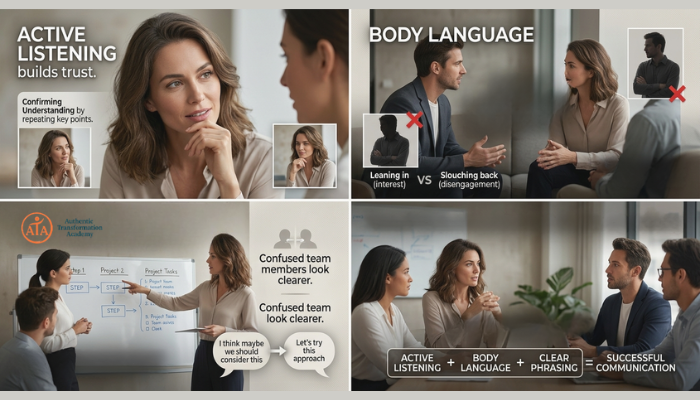
Active listening means repeating back what someone said to confirm you understood their point correctly. And people open up easily when they see you’re genuinely focused on their words, not your next reply (surprisingly rare in actual practice).
We’ve seen many Singaporean teams often skip this step, assuming everyone’s on the same page without checking first.
Body Language Speaks Louder Than Words
You can say all the right words and still kill the conversation with the wrong posture. Even crossed arms or avoiding eye contact can shut down conversations before anyone finishes their introductions.
Subtle movements also count. Leaning in slightly shows interest, while slouching back signals disengagement or boredom to your teammates. So you should pay attention to facial expressions and eye contact during group discussions.
Clear Communication Stops Confusion Early
Clear communication is the fastest way to stop small misunderstandings from becoming project disasters. Meanwhile, vague instructions create rework because team members fill in gaps with their own assumptions instead.
For example, saying “I think maybe we should consider this” sounds uncertain compared to “Let’s try this approach.” This second version gives your team a clear direction to follow.
Bottom Line: Clear phrasing saves time, reduces frustration, and keeps projects moving forward without constant clarifications.
How Training Shapes Better Team Collaboration
Training sessions help teams collaborate effortlessly without forcing anyone into awkward trust falls or icebreakers. The differences become clear when you compare before and after side by side:
| Before Training | After Training |
| Feedback triggers defensiveness | Teams handle constructive criticism calmly |
| Collaboration seems forced | Strategies feel natural |
| High-stakes meetings create tension | Safe practice builds confidence first |
In practice, these sessions introduce strategies that work in real workplace situations. Our experience with programmes across Singapore has shown participants creating a collaborative environment where testing techniques before client meetings becomes safe and productive.
Once this improves, teams will solve problems without endless email chains or tense stand-ups. But this won’t just happen because people attended one workshop. You need strategies that stick without forcing them.
Collaboration Strategies That Feel Natural
Most collaboration advice sounds great on paper, but sounds forced the moment you try it in real meetings. That’s why the best strategies become invisible when they work.
The two strategies below work in daily practice:
Make Space for Everyone to Feel Heard
Just because someone speaks up first doesn’t mean they have the best idea. Yet dominant voices often drown out quieter team members who hesitate to interrupt. To fix this problem, round-robin check-ins ensure everyone contributes at least once, giving quieter voices space they wouldn’t normally take.
When people feel heard, mutual respect builds naturally, and they engage more willingly in discussions. This works especially well during brainstorming sessions where diverse input is actually important.
Use Structured Check-Ins for Decision-Making
If you want meetings that move projects forward, structured check-ins keep everyone focused and accountable.
For example, quick daily stand-ups clarify priorities and surface blockers before they snowball into bigger project management issues or missed deadlines. Beyond that, this approach stops group discussions from drifting into endless debates that waste time without resolving anything concrete.
Based on our firsthand experience, clear expectations about the decision-making process help cross-team collaboration run smoothly when different departments need to align.
When Professional Development Meets Continuous Learning
Professional development works best when paired with continuous learning, allowing employees to build skills steadily instead of cramming everything into one session.
Think about it this way: Continuous learning keeps communication skills sharp. Regular practice prevents techniques in body language and verbal clarity from fading as they do after one-off workshops. Frankly, without ongoing reinforcement, even the best training loses impact within weeks.
In practice, professional development programmes build on earlier lessons and help employees refine approaches like asking clarifying questions and summarizing key points over time. The right tools for learning make this easier, especially for new employees who need structured support as they develop new skills (a step many companies overlook entirely).
Does Effective Communication Really Boost Employee Engagement?
Yes, effective communication directly increases employee engagement by making people connected and valued at work. Here’s what happens when communication improves across teams:
- Tension Drops Fast: Effective communication reduces workplace friction by addressing issues directly instead of letting resentment build silently. Usually, professionals who communicate well report higher job satisfaction because they feel connected to their colleagues.
- Engagement Rises When People Aren’t Ignored: When team members feel misunderstood or dismissed, engagement plummets. Clear conversations prevent this early, which creates a positive work environment where people want to contribute.
- Conflict Becomes Optional: Good communication stops unnecessary conflict before it starts. Teams that talk openly resolve disagreements faster without dragging everyone into tense email threads.
- Retention Improves: Hiring managers notice that Singaporean organizations with strong communication cultures retain talent longer because staff know their voices actually count.
Fix how teams talk to each other, and you fix most engagement problems at the root.
Start Building Fruitful Communication Habits Today
Want to know the best part? You don’t need a complete overhaul to improve workplace communication. Small, consistent shifts in how your teams interact build stronger communication skills more quickly than waiting for the perfect training programme.
At the end of the day, professionals who invest in communication development see results that stick. Your teams work better together. People understand each other without endless clarification emails.
At Authentic Transformation Academy, we help Singapore professionals build communication skills that feel natural. Ready to see what better communication can do for your team? Let’s talk.
